
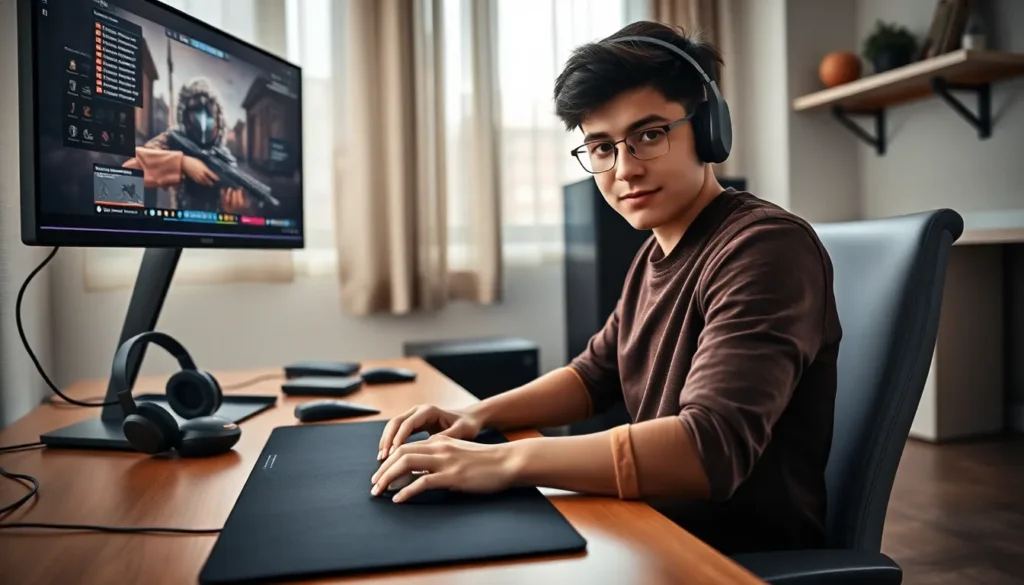

Every first-person shooter player wants to land more headshots, win more gunfights, and climb the ranks. These FPS tips will help players do exactly that. Whether someone plays Valorant, Counter-Strike 2, Call of Duty, or Apex Legends, the fundamentals remain the same. Raw talent matters less than most people think. Smart practice and proper technique matter more. This guide breaks down the core skills that separate average players from elite ones. Players will learn how to optimize their settings, improve their aim, read the map better, and build habits that actually stick.
Table of Contents
ToggleKey Takeaways
- Lower mouse sensitivity (25-35 cm per 360°) and disabling mouse acceleration creates consistent aim that most pro players rely on.
- Keep your crosshair at head level where enemies appear—this single FPS tip eliminates wasted milliseconds in every gunfight.
- Smart positioning and using cover wins more fights than raw aim; always ask who has the advantage before engaging.
- Learn your game’s movement mechanics like strafing, counter-strafing, and jump peeking to become harder to hit.
- Consistent short practice sessions beat marathon gaming—spend 15-30 minutes in aim trainers and review your gameplay VODs to spot mistakes.
- Focus on one FPS tip at a time, like crosshair placement, until it becomes automatic before adding new skills.
Mastering Your Mouse and Sensitivity Settings
The first FPS tips players should consider involve their gear and settings. A bad sensitivity can hold someone back for months or years. Finding the right mouse sensitivity takes experimentation. Most pro players use lower sensitivities than casual players expect. A good starting point is 25-35 cm per 360-degree turn.
Players should disable mouse acceleration in both Windows settings and their game. Mouse acceleration changes cursor speed based on how fast someone moves the mouse. This makes aim inconsistent. Turning it off creates a 1:1 ratio between hand movement and in-game movement.
The mouse itself matters too. A lighter mouse (under 80 grams) reduces fatigue during long sessions. Large mousepads give players room to make sweeping motions at lower sensitivities. These FPS tips about hardware won’t magically create skill, but they remove barriers.
Once someone picks a sensitivity, they should stick with it. Constantly changing settings prevents muscle memory from forming. Give any new sensitivity at least two weeks before judging it. The brain needs time to adapt.
In-game settings also affect performance. Higher framerates give players an advantage. They see enemy movements sooner and their inputs register faster. Players should lower graphics quality if it means hitting 144 FPS or higher. Competitive players prioritize performance over visuals every time.
Crosshair Placement and Pre-Aiming Techniques
Crosshair placement separates good players from great ones. This concept is simple: keep the crosshair at head level where enemies will appear. Most players aim at the ground or at chest height without realizing it. They waste precious milliseconds adjusting their aim when an enemy appears.
These FPS tips about crosshair placement require constant attention. Players should imagine where an enemy’s head would be at every moment. The crosshair should trace along walls and corners at that height. When an enemy peeks, the player only needs to click, not flick.
Pre-aiming takes this concept further. Smart players aim at common positions before they even see an enemy. They know where opponents typically stand, peek, or hold angles. The crosshair arrives there first. This turns reaction-based fights into prediction-based ones.
Players can practice crosshair placement in empty servers. They should walk through maps slowly, keeping their crosshair at head height the entire time. Recording gameplay helps too. Watching replays reveals bad habits that feel invisible during play.
Another useful technique is called “slicing the pie.” Instead of swinging wide around corners, players peek gradually. They expose themselves to one angle at a time. This prevents getting shot from unexpected positions. Combined with proper crosshair placement, this makes clearing rooms much safer.
These FPS tips require discipline. Bad habits feel natural because they’re familiar. Players need to force themselves to aim higher until it becomes automatic.
Map Awareness and Positioning Strategies
Aim matters, but positioning often decides fights before shots get fired. Smart positioning means taking engagements on favorable terms. Players should ask themselves: “If an enemy appears right now, who has the advantage?”
High ground gives players an edge in most FPS games. Enemies below must aim upward, exposing more of their body. Players above show only their head and shoulders. This simple advantage wins fights.
Cover usage separates skilled players from reckless ones. Standing in the open is a death sentence. Every position should have nearby cover to retreat behind. Players should peek from cover, take their shot, and return to safety.
Map knowledge takes time to develop. Players should learn callouts, common positions, and rotation paths. They should know where enemies typically push from and when. This information comes from experience and from watching better players.
Sound plays a huge role in FPS games. Footsteps reveal enemy locations. Gunshots indicate fights happening elsewhere. Players should use headphones and pay attention to audio cues. Sound often provides information before visual confirmation.
These FPS tips about positioning reward patience. Aggressive players sometimes succeed through mechanical skill, but consistent winners play smart. They take fights they can win and avoid fights they can’t.
Movement Mechanics That Give You an Edge
Good movement makes players harder to hit and more effective in fights. Each FPS game has unique movement mechanics. Learning them provides significant advantages.
Strafing while shooting is fundamental. Standing still makes someone an easy target. Players should move side to side while firing. In some games, counter-strafing, briefly tapping the opposite movement key, stops movement instantly for accurate shots.
Jump peeking lets players gather information safely. A quick jump around a corner reveals enemy positions without exposing the player for long. The enemy sees a blur: the player sees everything.
Slide canceling, bunny hopping, and other advanced techniques exist in various FPS games. Players should learn which mechanics their game rewards. YouTube tutorials and practice sessions help here.
These FPS tips about movement connect directly to gunfights. A player who can dodge while shooting and peek unpredictably becomes difficult to kill. Movement creates opportunities that pure aim cannot.
Players should also understand how their movement sounds to enemies. Running creates noise. Walking stays quiet but slows players down. Knowing when to sprint and when to creep gives tactical advantages.
Building Consistent Practice Habits
Reading FPS tips means nothing without practice. Improvement requires consistent effort over time. The best players train deliberately, not randomly.
Aim trainers like Aim Lab and Kovaak’s build mechanical skills. Players should spend 15-30 minutes warming up before competitive sessions. Specific routines work better than random exercises. Tracking, flicking, and target switching each develop different skills.
Playing the game matters most. Aim trainers supplement practice, they don’t replace it. Real matches teach positioning, game sense, and decision-making that bots cannot simulate.
VOD review accelerates improvement. Players should record their matches and watch them afterward. They’ll spot mistakes they missed in the moment. Questions to ask: “Why did I die there? What could I have done differently? Where was my crosshair?”
Consistency beats intensity. Playing four hours once a week helps less than playing one hour four times per week. The brain consolidates skills during rest. Regular short sessions build muscle memory faster than occasional marathons.
These FPS tips only work if players apply them. Knowledge without action produces nothing. Start with one area, maybe crosshair placement, and focus on it for a week. Add another skill once the first feels natural.


